
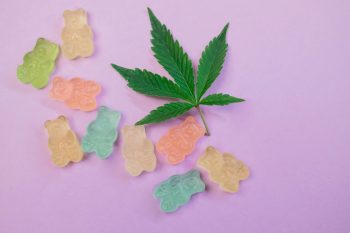
Common hemp and its age on Earth
Next, in this writing we are not dealing with Cannabis Indicum but only with the common hemp – Cannabis sativa.
Common hemp (cannabis sativa) has an interesting name, because in Latin the word “sativa” has to do with what is fulfilled, with abundance, prosperity, satiety.
The consequences of using this plant are so important that:
- would feed and heal much of humanity
- would provide natural fibers for pleasant and durable natural clothes, and
- it can be a source of pulp for paper and fire with productivity and efficiency rarely encountered.
Just as sea buckthorn is considered a strategic crop for Romania, perhaps much more should be considered common hemp a strategic crop.
What does it look like?
Biologists say that it is an annual herbaceous plant of the Cannabidaceae family, with a tall size, 2-3m, and can even grow up to 5m in exceptional cases.
It has an unbranched stem, long lanceolate leaves with a serrated edge and dense, semi-compact inflorescences.
The term “cannabis” has been preserved from a word of scita or, more likely, Thracian origin. The Greeks imported it, then the Romans and thus it became known to western civilizations. The word is a very old one, with Indo-European roots.
The ancient Eastern peoples (the Akkadians, Babylonians and Assyrians) knew it in the form of “quannabu”. The original meaning was “smoke-making”, demonstrating the ancestral habit of using the plant for practical and recreational purposes.
History of hemp cultivation
It is very old, being recorded since the early Neolithic (12,000 years ago) as a source for obtaining textile fibers, oil, food, as a medium in spiritual and religious practices or as a medicinal plant. Here are some attestations that confirm that this occupationis one of the oldest branches of human “industry“ (and certainly the oldest directly attested):
8000 i.Ch. = according to Columbia History of the World, the oldest proof of the human industry is a piece of hemp fabric, dating roughly from this period. Hemp originated in Central Asia, later spreading to China, India, and Europe.
2700 i.Ch. = the legendary Chinese emperor Shen Nung (The Divine Farmer) includes hemp in his book on healing plants, considered to be the first medical text in the world. Hemp is called “a superior plant” and rightly so! The Chinese used it entirely, from the top to the roots, in the textile industry, in medicine and in food.
1400 i.Ch. = the use of hemp is attested in India, in cultural-religious ceremonies and certified in writing in Sanskrit texts dating from this period. In the medical writing of Sushruta, made up before the year 1000 i.Ch., it was said that the plant could cure leprosy.
800 i.Ch. = the Scythians bring hemp to Europe from Central Asia and invent the scythe.
563 i.Ch = many Buddhist sects believe that Gautama Buddha (563 i.Ch. – 483 i.Ch.) He would have eaten nothing but hemp seeds and leaves for six years. However, the plant was then intensively cultivated in northern India, where it is believed that it spent most of its life.
In sec. You i.Ch. = the historian Herodotus describes the garments made of fine hemp fabric in the Greek costume.
300 i.Ch. = are built Roman aqueducts that transport water in cities. It turns out that these amazing engineering achievements were built using hemp mortar !
100 i.Ch. = the Chinese make paper from fibrous materials such as mulberry wood, hemp, bark, etc. Year 105 i.Ch. it is often quoted as the year of the discovery of the paper by an official of the Chinese Court, Tsai Lun, although historians today consider that it actually happened 200 years earlier. The addition of hemp to mulberry wood pulp led to the manufacture of a much better quality paper, an invention that then spread to the rest of the world, on the Silk Road.
70 d.Ch. = hemp is first cultivated in England, later becoming a well-established crop.
100 d.Ch. = the Greek physician Dioscorides describes its many medicinal uses in his five-volume work, De Materia Medica.
He is attracted by both the particularly strong fibers and the medicinal properties.
Gaius Plinius Secundus (23-79 d.Ch.) writes in Naturalis Historia about the industrial uses of hemp and how it should be cultivated.
565 d.Ch. = the Merovingian dynasty, which ruled over the territory of present-day France and Germany, buried Queen Adelgunde in a particularly refined hemp fabric.
600 d.Ch. = in the south of France is built a bridge made of hemp shells mixed with lime. The bridge petrified and is solid even today.
800 d.Ch. = Charlemagne, founder of the Holy Roman Empire, submits a law on the cultivation of hemp.
1009 d.Ch. = hemp-based paper also reaches Europe, through Arab culture.
The first paper mill is built in Xativa, Spain. The manufacture of paper continued here under Moorish rule until 1244 d.Ch., when the European armies drove out the Moors.
For the next 850
years
the paper will be made mostly from hemp.
1100 d.Ch. = the knights of the Middle Ages drink hemp beer.
1215 d.Ch. = Magna Carta, the first step towards a constitution, is written on hemp paper.
1492 d.Ch. = the strings and sails used by Columbus in crossing the Atlantic are made of the most solid and long fibers, which only hemp can produce. If they had used other materials, the ships would not have survived this long and demanding journey.
1535 d.Ch. = Henry VIII, the most powerful of all British monarchs, submits a document;
This document states that all landowners must cultivate an acre of hemp soil, otherwise they will be sanctioned.
This means that this British king understood hemp as a strategic plant, important as steel, water, fuels and the like.
1564 d.Ch. = royal Philip of Spain ordered the cultivation of hemp throughout the Empire, from present-day Argentina to Oregon, following the example of Queen Elizabeth I, who had promulgated a similar law in England.
1600 d.Ch. = Galileo Galilei, the father of modern astronomy, makes his notes on hemp paper.
1791 d.Ch. = President George Washington sets import duties on hemp to encourage domestic production.
Thomas Jefferson calls hemp a necessity for the well-being and prosperity of the nation.
He recommends farmers to grow hemp instead of tobacco.
George Washington exhorts: “Enjoy the hemp seed to the fullest. Cultivate it everywhere.”
1941-1945 d.Ch. – The “Hemp for Victory” campaign appears in the U.S. due to the hemp supply crisis in Japan during World War II.
Being used for vital military items (clothes, rope, cloth), subsidies are offered to hemp growers, who are even exempt from military service. Promotional films such as “Hemp for Victory” are produced, which illustrate the importance of the so-called “Victory Gardens.”
As a result, hemp crops grow several thousand times.
2001 d.Ch. = “hemp car” crosses North America, using a hemp biofuel (biodiesel).
The car departs Washington D.C. on July 4, 2001 and returns home on October 2, 2001.
She manages to cover 10,000 miles in order to promote the use of hemp as an alternative fuel source.
On the territory of Romania, the hemp culture was facilitated by the Scythians starting with the seventh century i.Ch.
Herodotus mentions the occupation of Dacian women in making clothing and decorations in the household.
The Dacians also used hemp to heal wounds and burns with the poultice in the inflorescence.
The tradition of growing and processing hemp in the household system has been maintained in some areas to this day.
Until 1989, Romania occupied the first place in Europe, cultivating 60-70% of the total production and the 4th place in the world, with about 50,000 ha cultivated.
Despite these multi-millennial testimonies and its undeniable usefulness, hemp still suffers from the interests of certain circles of influence, which have even managed to outlawit.
Here’s an example of the events that took place in the U.S., in the late ’20s and ’30s.
Through a strong manipulation of the population (mass-media), an obscure word of Mexican origin was introduced, “marijuana”.
Thus the idea was induced, that this wonderful plant is, in fact, the supply of a drug.
This manipulation culminated in a ban on the cultivation of the hemp and its outlawing in September 1937.
All this came as a result of pressure from the large petrochemical corporation DuPont.
This company patented its process of making plastic from oil and coal, as the natural hemp industry would have seriously endangered billions of dollars in business.
Therefore, declaring hemp illegal was their only option. And they succeeded in doing so with the help of civil servants in key positions.
Andrew Mellon (1855-1937), who became Secretary of Finance in the Hoover administration, appointed his nephew, Harry J. Anslinger, to head the Federal Bureau of Narcotics and Dangerous Drugs.
Despite this totally unjust framing, arising from the perspective of the interests directed by the financial world,
Common hemp (domestic) remains a wonder of nature, with extraordinary qualities.
The hemp strain has the longest and strongest fibers of all plants.
These fibers can be transformed into any construction material (putty, cement, paint, plaster, reinforced concrete, insulation, etc.).
Ecologically sustainable hemp does not require herbicides and pesticides to be cultivated (except for special conditions).
It creates humus, removes heavy metals from the soil and absorbs enormous amounts of carbon dioxide from the atmosphere.
It is a very fast growing crop, having a fiber yield per hectare, higher than any other plant.
It can produce 250% more fiber than cotton, with less water consumption and 600% more than flax.
All this they do, using the same surface of land.
The structure of the hemp plant is essential to its quality as a raw material for the production of paper.
The bark contains primary and secondary liberian fibers.
They are far superior in quality compared to other suppliers of raw material for paper.
The hemp strain only needs 4 months to reach maturity.
But trees need between 20 and 80 years to be mature.
If the use of fossil fuels and trees for paper and construction could be banned,
Hemp, renewable annually, would be sufficient for:
- to ensure the world’s demand for paper and textiles
- solving all energy, domestic, industrial and transport needs around the world
- reducing pollution, restoring the soil and cleaning the atmosphere