Vyasa – legendary author of Mahhabhasta, Vedas and Puranes, founder of Vedanta School

  Vyasa is the legendary author of some of the most important works in the Hindu tradition. In India, his birthday is celebrated with the Guru Purnimafestival, on Shukla Purnima’s birthday, in the month of Ashadha (June-July). A number of traditions recognize him as the avatar of Vishnu Vyasa is also considered to be one […]

Vyasa – legendary author of Mahhabhasta, Vedas and Puranes, founder of Vedanta School Read More »

Abhinanagupta- the great master of Kasmirian Shivaism

Abhinavagupta was considered an important musician, poet, playwright, exegete, theologian and logician, being a personality who exerted an exceptional influence on Indian culture. The great sage Abhinavagupta is said to have been an avatar of Shiva Even today he is unanimously accepted as one of the greatest Indian spiritual masters, philosophers, mystics and aestheticians. Although

Abhinanagupta- the great master of Kasmirian Shivaism Read More »

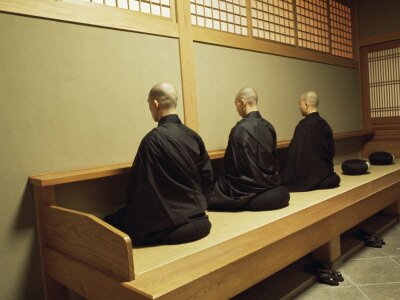
ZAZEN MEDITATION – peace and bliss – short spiritual initiation


Zazen represents the heart of the meditative practices of Zen Buddhism. Zazen is more than just a meditation, it is an attitude towards ourselves and the whole world in which we are being. The literal translation of the term signifies “sitting meditation”, but the semantic context implies that the Zen practitioner adopts a certain posture, gradually obtains a state of deep calm of mind and body, and thus “invites” into his being the manifestation of illuminating states (satori).

ZAZEN MEDITATION – peace and bliss – short spiritual initiation Read More »

Yogananda – authentic spiritual master and messenger of spirituality in the West

  Paramahamsa Yogananda, born Mukunda Lal Ghosh on January 5, 1893 in Gorakhpur, India, is considered to be one of the great spiritual personalities of India. He is the one who made Kriya Yoga known in Western countries, especially in the United States, through his famous book “Autobiography of a Yogi”. First published in 1946,

Yogananda – authentic spiritual master and messenger of spirituality in the West Read More »

What does the posting – Vairagya – look like in action?

What does detachment look like in the middle of the action? People who understand the necessity of detachment as an essential step in spiritual evolution towards ourselves and towards happiness, knowledge and freedom, expect that detachment will be a serenity, impertubable state, without variations in energies. And isn’t that right? Detachment in meditation is so

What does the posting – Vairagya – look like in action? Read More »

Ramana Maharshi – the nectar of spiritual achievement was his daily taste

  What is extraordinary about Ramana Maharishi is that he has benefited from exceptional grace.He felt the thrill of spiritual aspiration from an early age and meditated with an enormous “thirst” to know the Self. The nectar of spiritual attainment was his everyday taste and his disciples appeared around him without anyone calling them, attracted

Ramana Maharshi – the nectar of spiritual achievement was his daily taste Read More »

Chögyal Namkhai Norbu – a great Tibetan master and a spiritual warrior

  Dzogchen is a Tibetan spiritual path that traditionally cultivates nondualism and yoga in the midst of life. Chögyal Namkhai Norbu Rinpoche is the undisputed master of the Dzogchen School, a school that in the world was understood to be part of Vajrayana but which the Master considered to be in its own right. The

Chögyal Namkhai Norbu – a great Tibetan master and a spiritual warrior Read More »

“A Love Letter” – an authentic perspective on Love

  Paramahamsa Yogananda was described by his beloved disciple Rajarsi Janakananda as the Premavatar, or “the embodiment of divine love.” In the following lines, written in 1936, Paramahamsaji speaks first of his own search for divine love, and then of his unity with “God present as Love.” “I have sought love in many lives. I

“A Love Letter” – an authentic perspective on Love Read More »

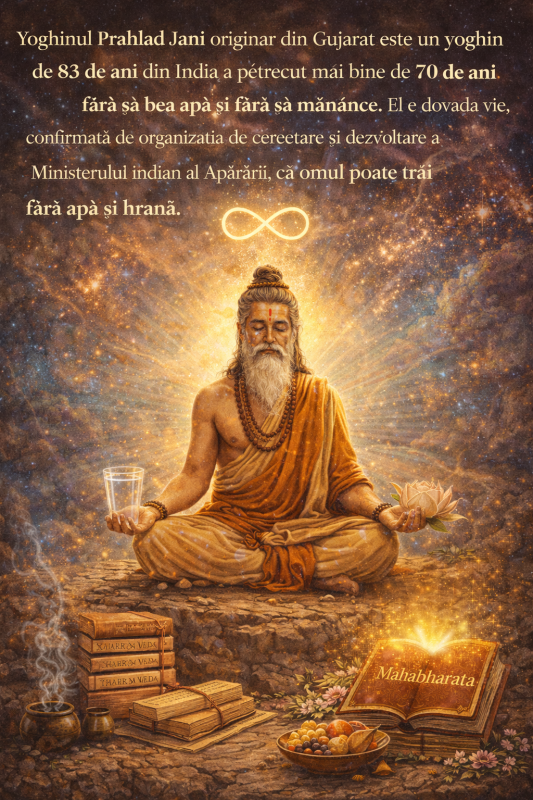
Anaharin – traditional, authentic process for revitalization, improvement of health, purification of the body and mind

  ANAHARIN or black fasting with water alone is a procedure often used in Abheda Yoga, studied at our school as part of the lessons on Ayusya – long life techniques.The main prejudice related to this process is the illusion that man “functions” due to the chemical energy that comes from the oxidative phenomena of

Anaharin – traditional, authentic process for revitalization, improvement of health, purification of the body and mind Read More »

Is Shaktipat an objective phenomenon? – Abheda Summer Camp, August 2019

  Testimonies that are related, in particular, to the Shaktipat transmissions that were made by our master in the camp ♥ “For me Shaktipat was an obvious boost to the teacher’s energy. I felt this; telepathic connection and a huge love for us… a beatific joy. My body stopped listening to me, my legs were

Is Shaktipat an objective phenomenon? – Abheda Summer Camp, August 2019 Read More »

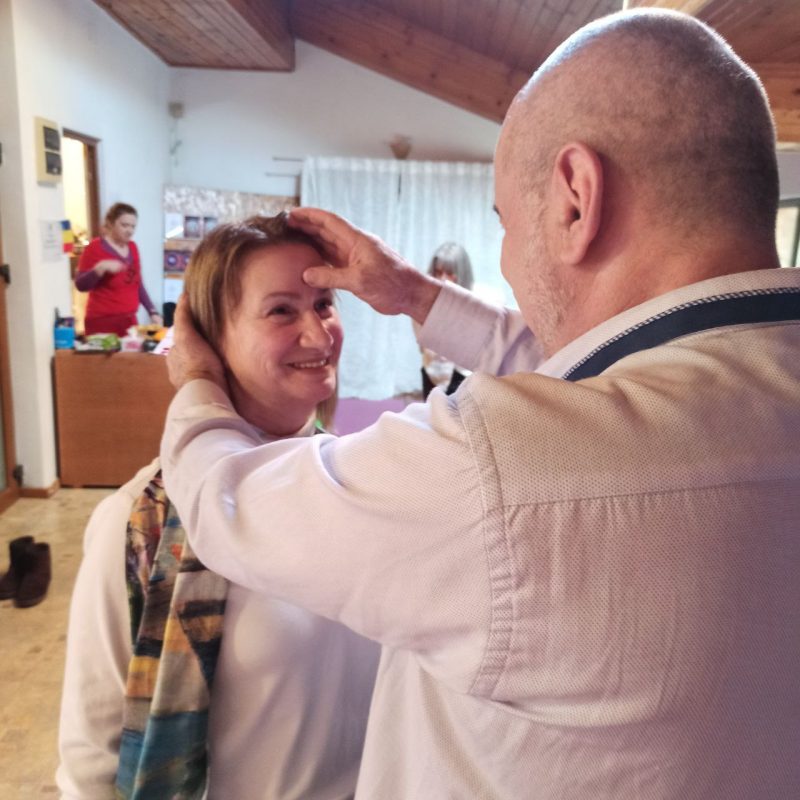
About Shaktipat – Grace or help that usually comes through the Spiritual Master

  Shaktipat means, in translation, “coming”, “descending” or “descending” of Grace or Energy, Shakti on a man. That is, it is a help, an impulse that comes through a Master or even without such external support (i.e. spontaneous) and that allows the student to achieve, for the moment, skills that he alone would not have

About Shaktipat – Grace or help that usually comes through the Spiritual Master Read More »

The Little Buddha ( Little Buddha – 1993 feature film)

The Little Buddha is a spiritual film, about a group of Buddhist monks, led by Lama Norbu (Ruocheng Ying), who searches for the child in which his great Buddhist teacher Lama Dorje (Geshe Tsultim Gyeltsen) was reincarnated. Lama Norbu and his fellow monks believe they have found a candidate for Dorje’s reincarnation in the person

The Little Buddha ( Little Buddha – 1993 feature film) Read More »

Do we need something from outside of us or is it good to teach our children that we are complete anyway?

  A tip circulating on the internet and belonging to a known author, taken out of context and share-looked intensely on the internet: “Teach your children that they don’t need anything outside of themselves to be happy – no person, no place or thing – and that true happiness is found within them. Teach them

Do we need something from outside of us or is it good to teach our children that we are complete anyway? Read More »

Scroll to Top